Breville makes more home espresso machines than almost anyone — and the range is genuinely confusing. Ten models, from $299 to $2,999, with overlapping names and an alphabet soup of “Impress,” “Pro” and “Touch.” This review sorts out which one is actually worth your money.
Breville is the name most people land on the moment they decide to stop buying pod coffee and start making real espresso at home. That is partly deserved — the machines are good — and partly the result of the brand being everywhere, from department stores to the counter of every coffee-obsessed friend you know.
The problem is that the range has grown into a wall of very similar stainless-steel boxes. The names blur together, the price steps are not obvious, and it is easy to either overspend on automation you do not need or underspend and end up with a machine that cannot produce the drink you actually want. This guide walks through the whole lineup, what each tier is really for, and how to buy the right one the first time.
The Verdict at a Glance
Pick these if
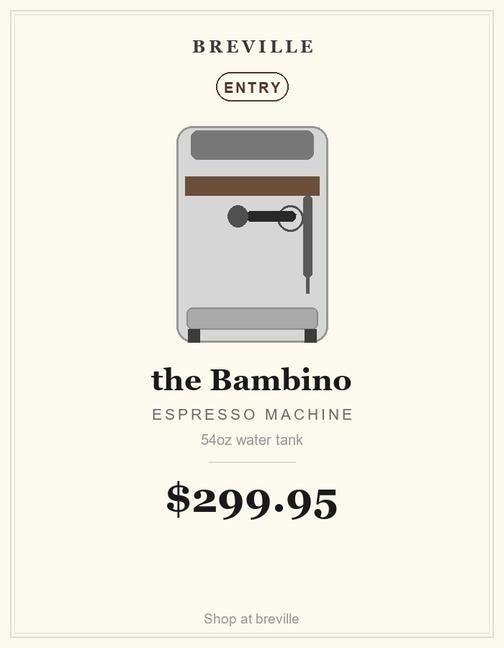
- Best on a budget → the Bambino ($299.95)
- Best overall value → the Barista Express
- Easiest for beginners → the Barista Touch Impress
- Best fully automatic → the Oracle Jet
Skip these if
- You don’t own a grinder → avoid the Bambino range
- You only drink black coffee → skip the milk-focused upgrades
- You want pods and zero effort → this is the wrong brand
What Breville Actually Is
Breville is an Australian company, founded in Sydney in 1932, that today sits at the top of the consumer espresso market in the US. (One genuinely useful thing to know: in the UK and Europe the exact same machines are sold under the Sage name because of an unrelated trademark. If you are buying in Britain, look for “Sage” — it is the same hardware.)
Breville’s pitch is its 4 Keys Formula: the right dose of freshly ground beans, precise temperature, optimal water pressure, and true micro-foam milk texture. Strip away the marketing and it means this: Breville believes the grinder matters as much as the machine, which is why so many of its machines build a grinder in — and why its cheapest machines conspicuously do not.
The Range, in Plain English
Rather than list every model, it helps to see them as five tiers, because that is how Breville actually positions them:
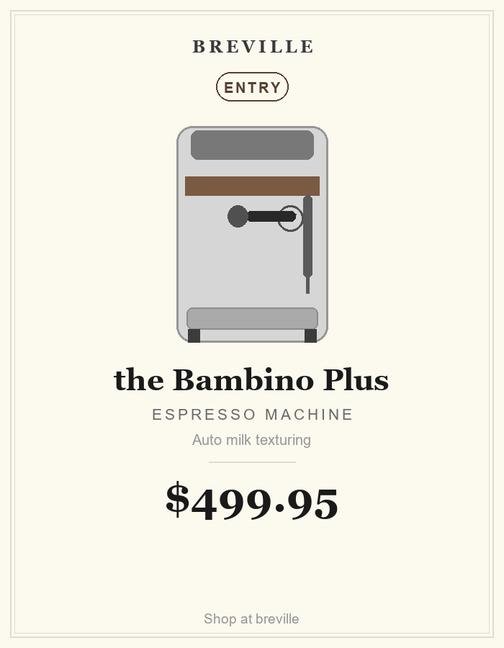
- Bambino ($299.95 / $499.95) — compact machines with no grinder. You must already own (or buy) a separate burr grinder.
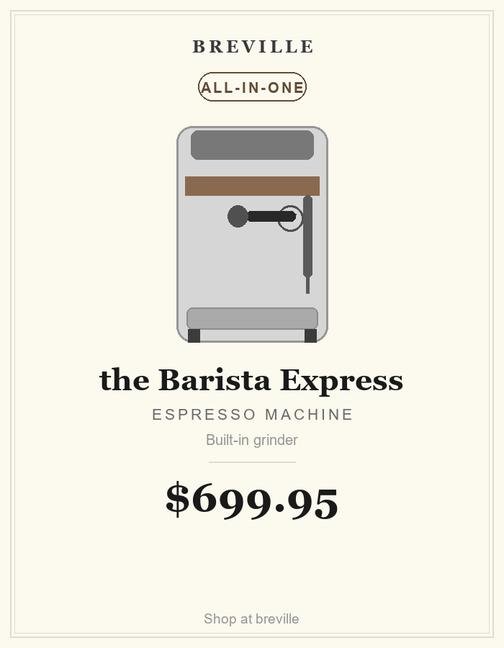
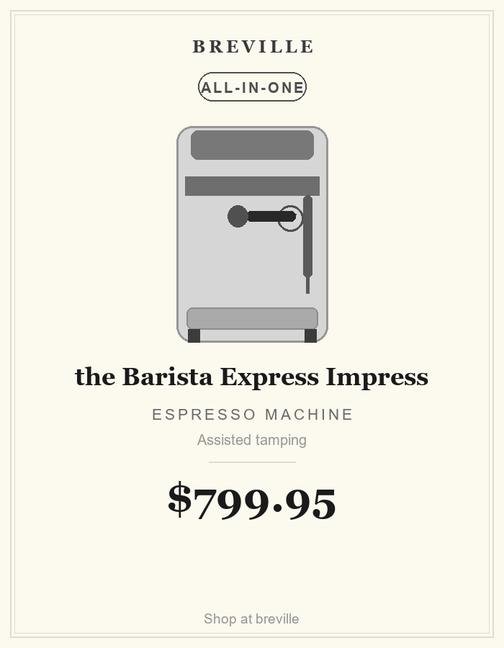
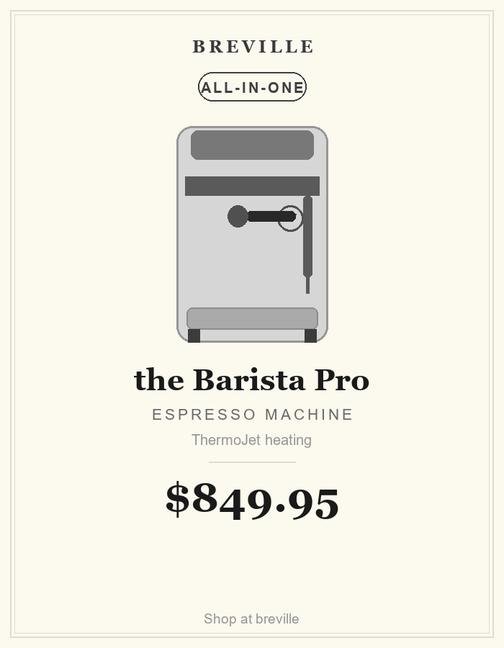
- Barista ($699.95 – $849.95) — the core range with a built-in grinder. This is where most people should look.
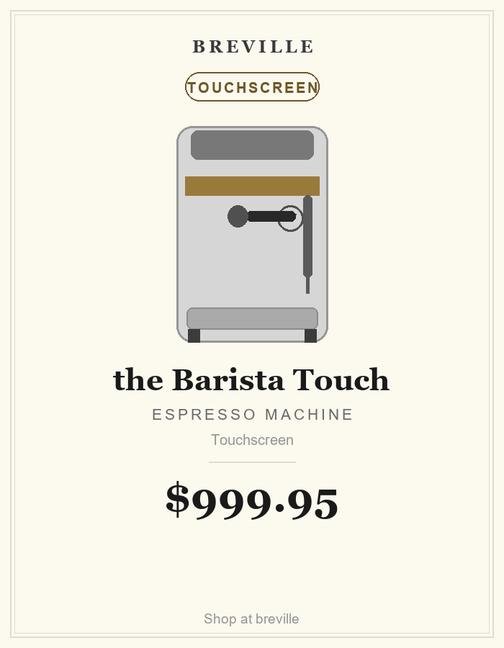
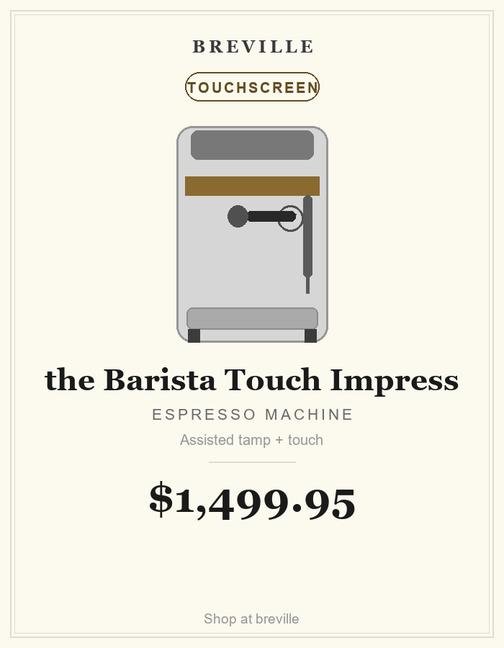
- Touch ($999.95 – $1,499.95) — the same coffee, but guided by a touchscreen and, on the Impress model, assisted tamping.
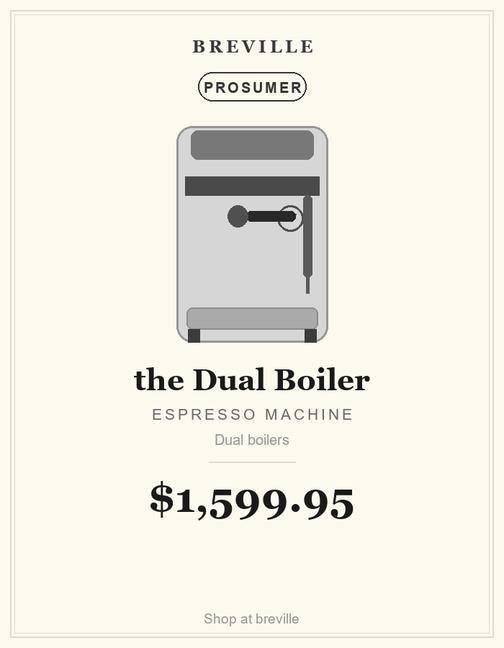
- Dual Boiler ($1,599.95) — the enthusiast machine: simultaneous brewing and steaming with real temperature control.
- Oracle ($1,999.95 – $2,999.95) — near-fully automatic machines that grind, dose, tamp and texture milk for you.
What You Actually Pay
Here is the current US pricing, from the entry Bambino to the flagship Oracle, checked at the time of writing:
| Machine | Price | Best for |
|---|---|---|
| the Bambino | $299.95 | Espresso drinkers who already own a grinder |
| the Bambino Plus | $499.95 | Milk drinks without steaming skill |
| the Barista Express | $699.95 | The default all-in-one choice |
| the Barista Express Impress | $799.95 | Beginners who want assisted tamping |
| the Barista Pro | $849.95 | Faster heat-up, same core coffee |
| the Barista Touch | $999.95 | Multi-person households, guided UI |
| the Barista Touch Impress | $1,499.95 | Easiest serious machine |
| the Dual Boiler | $1,599.95 | Enthusiasts who steam and brew at once |
| the Oracle Jet | $1,999.95 | Near-automatic café quality |
| the Oracle Dual Boiler | $2,999.95 | Full automation, no budget concern |
One number worth holding onto: the gap between the Bambino and the Barista Express is $400, and almost all of that is the built-in grinder. A separate good burr grinder costs roughly the same, so the “cheaper” Bambino is only cheaper if you already own one.
The Ten Machines, Ranked by What They’re For
Rather than a strict ranking — a $2,999 Oracle is not “worse” than a $300 Bambino, they are for different people — here is each model with an honest read on who it is actually for.
The Honest Downsides
Breville machines are good, but they are not perfect, and the marketing will not tell you any of this:
The grinder situation is the whole game
The Bambino models are cheap because they omit the grinder, and cheap espresso from a poor grinder is just sour, bitter espresso made faster. If you buy a Bambino without a grinder, you have not saved money — you have deferred it. This is the single most common Breville purchase mistake.
There is a real learning curve
The Barista Express and Barista Pro expect you to dial in grind size, dose and tamp. It takes most people a bag or two of beans — and a handful of genuinely bad shots — before the coffee is consistently good. The Touch and Oracle lines exist to remove exactly this friction, and they charge for it.
Maintenance is not optional
These machines need regular descaling, backflushing and filter changes, especially in hard-water areas. Skip it and the machine degrades slowly, then needs service. Breville sells the cleaning supplies, of course — factor them in.
The price premium is for convenience, not better coffee
A Barista Touch does not make measurably better espresso than a Barista Express at half the money — it makes it with less effort. Decide honestly whether you are paying for convenience or for coffee, because the difference is often hundreds of dollars.
Who It’s For (and Who Should Skip It)
Buy a Breville if
- You drink espresso or milk drinks daily
- You want to stop paying $5+ per café coffee
- You are willing to learn a little technique
- You value counter-top convenience and a built-in grinder
Skip it if
- You only drink drip or filter coffee
- You want zero effort — that is what pods are for
- You already own a great grinder and only need a machine
- You are on a tight budget and rarely make espresso
How to Buy Without Overpaying
- Sort the grinder first. Decide whether you own a good burr grinder. That single answer points you at the Bambino range or the Barista range.
- Buy refurbished or watch for cashback. Breville runs regular cashback and bundle offers (often including beans), and the machines are durable enough that refurbished units are a genuinely good deal.
- Don’t pay for automation you won’t use. The Touch and Oracle lines are wonderful — and most people do not need them.
- Factor in the beans. Breville pushes its beanz.com subscription hard (25% off and free bags on some machines). Fresh beans matter more than a $1,000 price difference, so take the offer if it suits you.
- Check the UK name. Buying in Britain? The identical machine is a Sage. Don’t overpay for the same hardware under a different name — and don’t be confused when you can’t find “Breville” locally.
Frequently Asked Questions
What is the difference between the Bambino and the Barista Express?
The short answer is the grinder. The Barista Express has a built-in conical burr grinder; the Bambino does not. The Express also has a larger footprint and a slightly higher steam output. If you already own a good grinder, save the money with the Bambino; if you are starting from zero, the Express is the better all-in-one value.
Do I really need a grinder, or can I use pre-ground coffee?
You can use pre-ground, but you will be fighting the machine the whole time. Espresso needs a very fine, very even grind that goes stale within minutes of grinding. Pre-ground is almost always the wrong fineness and the wrong freshness, so expect bitter or sour shots. This is the single biggest upgrade you can make.
Is a Breville worth it compared to a Nespresso or pod machine?
Different tools for different people. Pods are faster, cleaner and cheaper up front, but the per-cup cost is far higher and the coffee is not real espresso. A Breville pays for itself over time if you drink several coffees a day — the break-even against café prices is often a few months.
How long does a Breville espresso machine last?
With regular descaling and cleaning, most people get many years of daily use, and Breville machines are generally repairable with widely available parts. The usual failure points are scale build-up (avoidable with filtered water and descaling) and, eventually, the group-head gasket and pump — both replaceable.
Bambino Plus or Barista Express — which should I buy?
If you make mostly milk drinks and already own a grinder, the Bambino Plus (with its automatic milk texturing) is superb. If you want one self-contained unit that grinds and brews, buy the Barista Express. It is a coin-flip for many people, which is why both sell so well.
Which Breville should you buy?
If you are starting from scratch and want the best all-round value, it is hard to argue with the Barista Express at $699.95. Own a grinder already? The Bambino is a steal. Want it effortless? That is what the Oracle Jet is for.
Final Verdict
Breville’s range is confusing on purpose — it wants to sell every customer the machine one step above the one they need. Cut through it and the advice is simple: sort out your grinder, be honest about how much effort you will actually put in, and buy for that. Most people starting fresh will be happiest with the Barista Express. People who already own a grinder should buy a Bambino. People who want café quality with café convenience should look at the Oracle line — and everyone else can stop reading and start dialing in their shots.