Tumbler promises sharp kitchen knives without the whetstone learning curve. We break down how the rolling sharpener works, what it actually costs, and whether it’s worth the money.
Tumbler is a brand built around a single idea: a rolling knife sharpener. Instead of dragging a knife across a fixed stone, or yanking it through a slot, you roll a diamond-coated disc back and forth over the edge while a magnetic base holds the knife at a consistent angle.
That one design decision changes everything about sharpening. It removes the part that puts most people off — holding a precise angle by hand — and replaces it with something a complete beginner can do correctly on the first try. This is the pitch, and in practice it is mostly true.
How a Rolling Knife Sharpener Works
Traditional sharpening asks you to keep a blade at roughly 15–20 degrees against a stone while you move it. Get the angle wrong and you either do nothing or blunt the edge further. A rolling sharpener sidesteps this: the knife sits on a magnetic base at a fixed angle, and a rolling disc — coated in diamond abrasive — runs along the edge. The angle is set for you, so every pass is consistent.
- Set it down: the knife rests on a magnetic base or guide.
- Roll it: the abrasive disc rolls over the edge at the correct angle.
- Repeat: a few passes on each side and the edge is restored.
What You Actually Pay
| Product | Price | What it is |
|---|---|---|
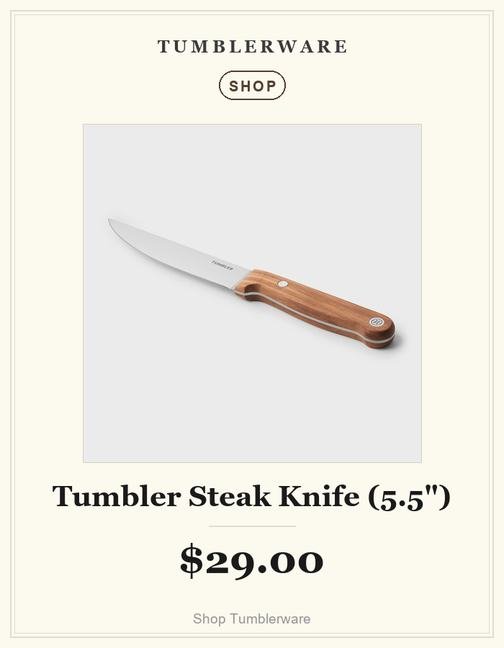
| Tumbler Steak Knife (5.5") | $29.00 | Cheapest entry point |
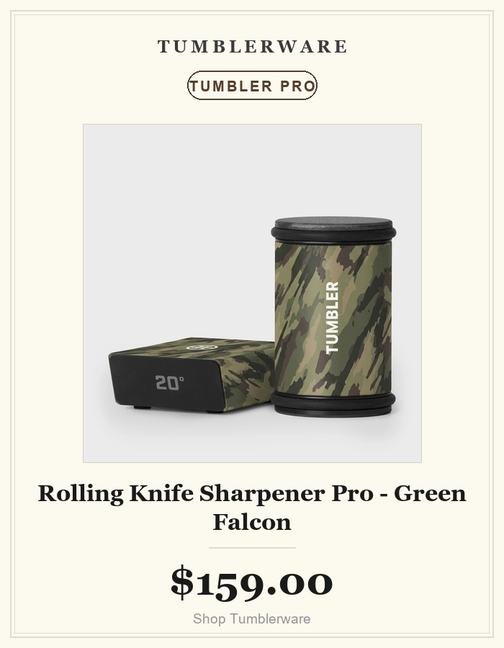
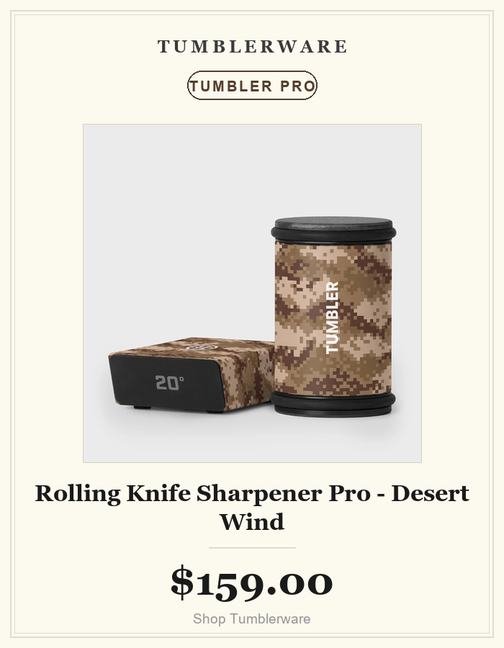
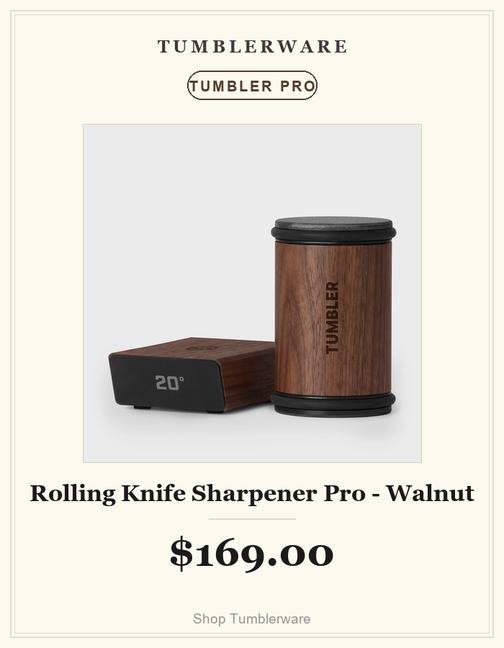
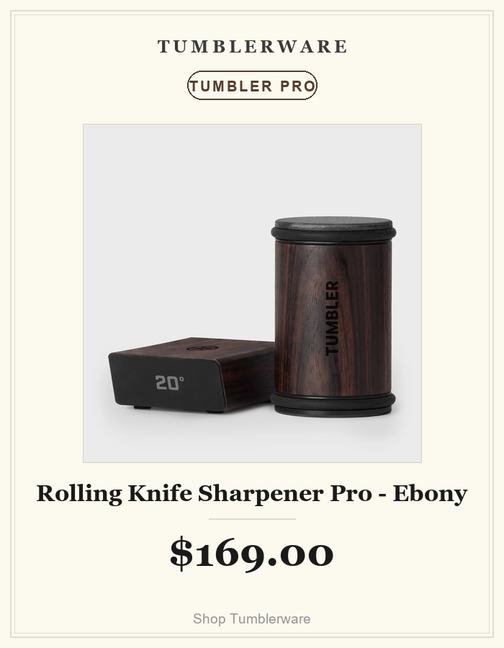
| Rolling Knife Sharpener Pro | $159–$169 | The core product, several finishes |
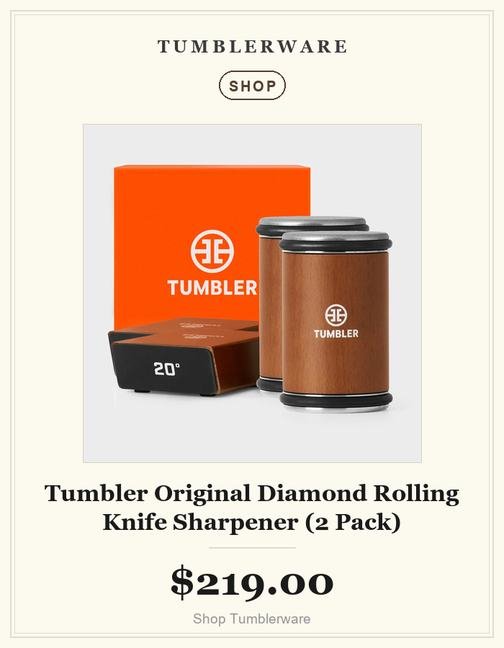
| Original Diamond Sharpener | $219.00 | The original model |
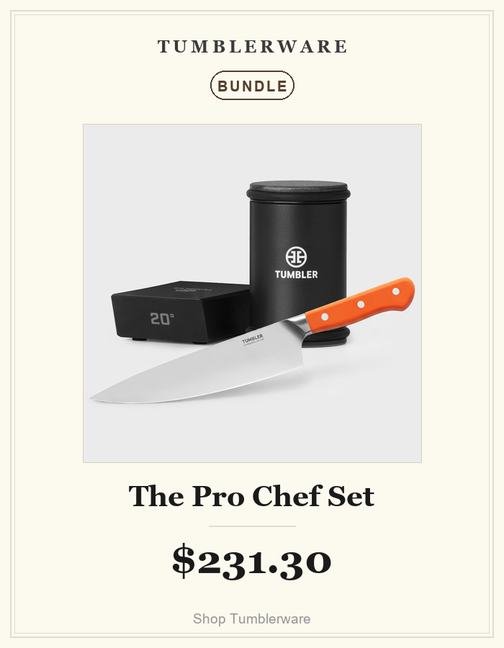
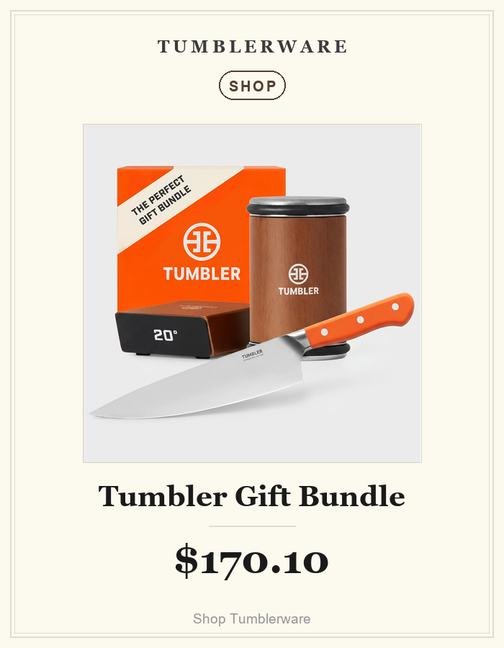
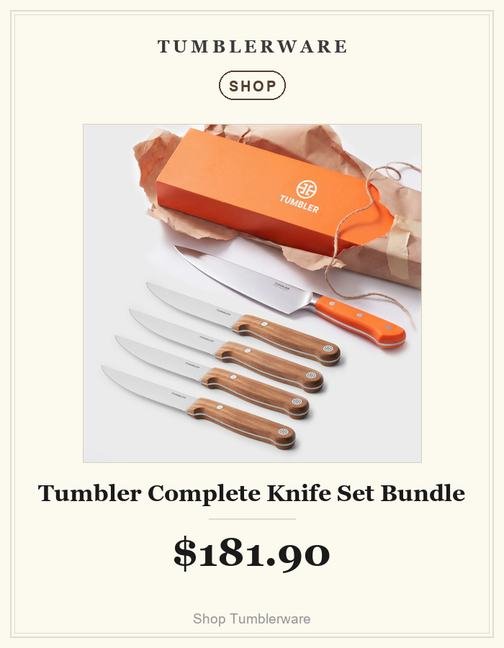
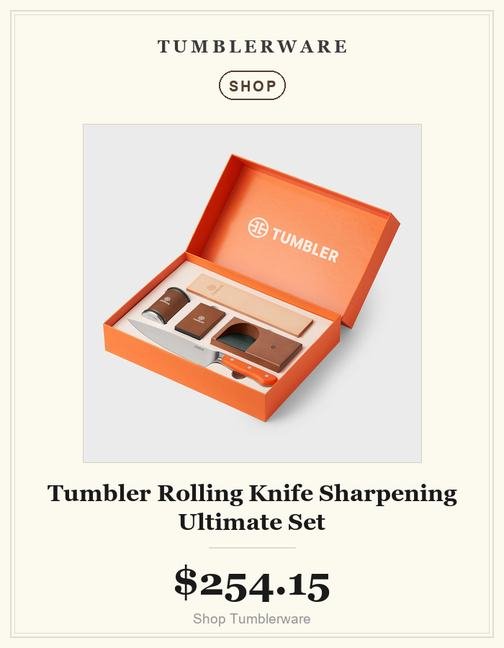
| Bundles & Sets | $170–$254 | Sharpener + accessories or knives |
The headline number to hold onto: the main sharpener sits around $159–$219, which is several times the cost of a good whetstone. You are paying for convenience, not raw sharpening power.
The Lineup at a Glance
Ten products, from a $29 single steak knife to a $254 ultimate bundle. Tap any card to see it on the official site.
What’s Good
It genuinely removes the learning curve
The single biggest reason Tumbler has taken off is that it works for people who have never sharpened a knife in their life. There is no angle to hold, no fear of wrecking the blade, and results are good enough that a home cook will notice the difference immediately.
It’s safe
Because the knife stays in a fixed holder and the disc does the moving, your fingers never have to be near the edge. That matters more than most reviews admit — a lot of people are put off sharpening purely by the risk of cutting themselves.
Consistent results, every time
Whetstones reward skill; the Tumbler rewards nothing — it just repeats the same angle on every pass. That consistency is exactly what a beginner cannot produce by hand.
Pros & Cons
✓ Pros
- Genuinely easy — no technique required
- Very safe to use
- Consistent angle on every pass
- Well built, diamond abrasive lasts
- Works for most standard kitchen knives
✗ Cons
- Expensive for a sharpener
- A practised whetstone user will get a sharper edge
- Rolling motion takes a little getting used to
- Not ideal for serrated or heavily damaged blades
The Honest Downsides
This is the part the marketing skips, and it matters:
You are paying for convenience, not power
A decent whetstone costs $30–$60 and, with maybe twenty minutes of practice, will put a noticeably sharper edge on a blade than a rolling sharpener. The Tumbler is the “I don’t want to learn” option, and it charges accordingly.
It is not a match for professional sharpening
If you want razor-grade edges, a guided system or a professional sharpening service is still the answer. The Tumbler targets “good enough for the kitchen,” and it hits that target — but it does not exceed it.
Some blades don’t suit it
Serrated knives and very thick or heavily chipped blades are outside the system’s sweet spot. It is a maintenance tool, not a repair tool.
Who It’s For (and Who Should Skip It)
The honest split is simple. This is for home cooks who want sharp knives and do not want to learn to sharpen. It is not for people who already own whetstones, or for anyone on a tight budget who is happy to spend twenty minutes learning a basic skill.
Buying Tips
- Start cheap. The $29 steak knife is the cheapest way to try the system before committing to the full sharpener.
- Pro vs Original. The Pro line is the current generation — the Original is the older model. Buy the Pro unless the Original is heavily discounted.
- Bundles beat single buys. If you are buying the sharpener anyway, the bundles (base + extra discs or knives) are usually the best value per item.
Frequently Asked Questions
How does a rolling knife sharpener actually work?
The knife rests on a magnetic base that holds it at a fixed angle, and you roll a diamond-coated disc back and forth over the edge. Because the angle is set by the base rather than by your hand, every pass is consistent — which is the whole advantage over a whetstone.
Does it work on all knives?
It works well on most standard kitchen knives — chef’s knives, paring knives and the like. Serrated blades and very thick or heavily damaged knives are outside its sweet spot, so treat it as a maintenance tool rather than a repair tool.
Is it better than a whetstone?
For raw sharpness, no — a practised hand with a whetstone will get a sharper edge. For consistency and ease, yes — the Tumbler removes the skill requirement entirely, which is precisely why people buy it.
How often should I sharpen?
For a home cook, touching up the edge every few weeks keeps a knife comfortable to use. The Tumbler is fast enough that a quick pass before cooking is realistic.
Is it safe for complete beginners?
Yes — this is one of its biggest strengths. The knife stays in a holder and the disc does the moving, so your hands never have to be near the cutting edge.
Final Verdict
✓ Buy it if
- You want sharp knives without learning a skill
- You’ve been put off by the risk of sharpening
- You value consistency over razor-grade sharpness
- You’re a home cook, not a professional
✗ Skip it if
- You already know how to use a whetstone
- You want the sharpest possible edge
- You’re on a tight budget
- You mostly use serrated knives
Ready to sharpen the easy way?
Start with the steak knife to try the system, or go straight for the Pro sharpener.
Shop Now →